Why trusting your feelings is key to changing your life

How often do you find yourself in conflict with what you feel?

Maybe you feel depressed and you don’t want to, but can’t seem to pull yourself out of the pit. Maybe you get angry at the tiniest things and you know you’re being irrational but keep snapping at your kids, your partner, your co-workers all the time.

Those feelings are trying to teach you something. Until you learn to trust them, you’re going to stay stuck right where you are, being a person you don’t want to be.

(Feeling) Inflamed lets you detach from that feeling of anger and ire so you can see what it’s trying to teach you. Transformation comes through observation, which leads to trust.

What would it look like…

What would it look like if you trusted your feelings instead of trying to shove them out the door as soon as they show up? If you’ve learned to trust the more positive emotions, like love, you can learn to trust the more negative ones too. Both sides of the emotional coin have the power to change your life.

The first step is to trust what you feel. Let me share an example from my corporate lifetime.

During my early years in Aviation Construction Management, the primary focus of my day to day work was with numbers. I created spreadsheets and pie charts and plugged formulas into cells to audit and verify invoices and calculate percentages.

I didn’t consider myself a “numbers” person, so I. Was. Terrified.

I felt anxious and on edge all the time, convinced my manager would discover “math” was my least developed skill and he’d have to let me go.

Every day, I woke up certain today was the day my job would end. This caused me to be irritable and tense, which wasn’t like me at all. And that’s when I knew I needed to take a step back and examine why I felt the way I did.

Stepping back…

It was true math hadn’t been my strongest subject during high school and college. I didn’t fully trust my abilities in that area which had caused the anxiety. However, the anxiety served a purpose – it pushed me to hone those math skills. I was so nervous I’d be “found out” as bad at math, I made it a point to learn how to use the accounting software better than anyone else on the team!

I learned to trust the anxiety and used it as a catalyst to learn. As a result, I became a highly valued and trusted member of the team. I became the person others turned to when they needed support. I received recognition for doing my job and doing it well, which led to advancement opportunities that exposed me to greater and greater challenges.

And when those new challenges arose, I trusted any anxiety that came along with them, and used it again as a catalyst to learn.

Exit through the gift shop…

You too can use your feelings as a catalyst to learn. The first step is learning to trust what you feel.

This first step is critical to your personal development. Without it, you’re always questioning your next step, at the mercy of your emotions. You absolutely need to feel whatever it is you feel but you don’t have to let those feelings turn you into someone you don’t want to be.

Learning to trust your feelings is key to changing your life.

If you need some support around learning to trust your feelings so you can become the person you’re supposed to be, drop me a note at hilaryclarkstudios@gmail.com and we’ll set up time to chat.


If you’re ready for a private (virtual) showing of my art, you can schedule an appointment here.

To discuss commissioning me to make a textured fiber painting specifically for you or someone you love, please schedule an exploratory commissioning conversation and we’ll see what we can create together.

If you enjoyed this article and found it helpful, please share with the ONE person you know could use it too!
Why you need to embrace feeling uncomfortable

We’re living in a time where the whole world feels uncomfortable, like putting on real pants after six months of work at home during a pandemic uncomfortable. However, just as wearing pants is important for preventing a public indecency charge, so is embracing your feeling of discomfort, regardless of what triggered it.

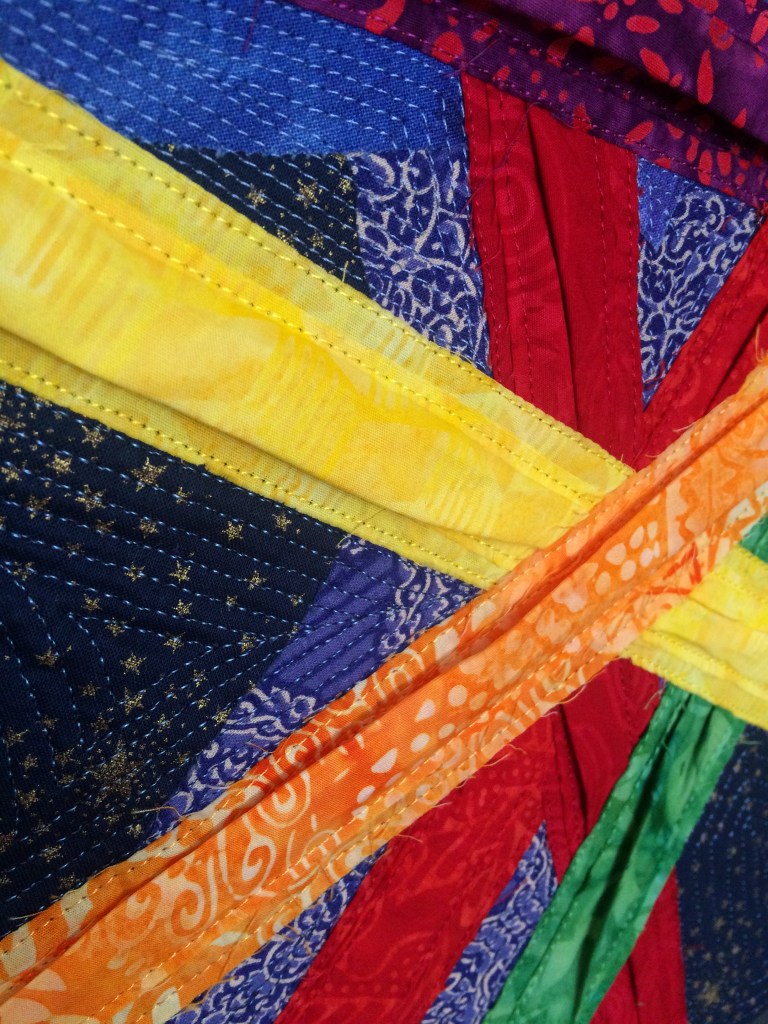
This detail shot of “Powerless” uses criss-crossing fabric strips to symbolize the web that traps you when you feel uncomfortable

Feeling uncomfortable…

Feelings provide lessons for us to learn. I believe this with my whole heart, which is why I create feelings out of fiber and talk so much about the importance of detaching from the feeling to observe what it has to teach you. Embracing the uncomfortable offers you the opportunity to learn, if you’re willing to face it.

When you feel uncomfortable, maybe trapped in a job you don’t like, lonely after all these months of forced isolation in your home due to COVID, or just from the simple act of wearing a mask, it’s natural to wish someone would come along and, if not straight up rescue you, at least put an end to all the nonsense. Unfortunately, it’s rare for discomfort to magically disappear.

Even if you should be so lucky for it to go *poof*, if you haven’t taken a good, long look at what the uncomfortable feeling is trying to teach you before it goes away, you’re setting yourself up for increased discomfort in the future when something that reminds you of where you are now triggers its return.

Embracing the discomfort…

I spent a good portion of my corporate career feeling uncomfortable because I had a fair amount of imposter syndrome. That discomfort became such a part of me, it began to feel normal. In fact, I got to the point where I thought feeling uncomfortable was a natural by-product of being an adult.

And then, one day, things changed. I don’t recall what did it, but I realized I didn’t have to feel uncomfortable and could instead embrace the discomfort and learn from it. As a result, I returned to making my art after many years away from the sewing machine, eventually finding my voice with my Feelings work. This provided a much needed release from the pressures of corporate work, and I found myself happier for it.

The lesson my uncomfortable feeling was delivering was a push to express my innate creativity, which I couldn’t really do in my day job. Creativity is a huge value for me and the suppression of that value is what had ultimately created such discomfort.

Your turn…

Your discomfort is trying to get your attention too. The lesson it carries is as unique as you are. It may be a push to change, a mirror to reflect, a reminder to return to your values. The longer you continue to ignore how uncomfortable you feel, or conversely, just bitch about it, the more difficult it becomes to discover what feeling uncomfortable is trying to teach you. Failing to embrace the pain hurts more than facing it head on.

So I challenge you to embrace feeling uncomfortable. Sit with the feeling to examine it. Ask the feeling what it wants you to learn. I promise you there will be an answer.

Exit through the gift shop…

Embracing feeling uncomfortable is important, regardless of what triggered the feeling in you. Every feeling has something to teach you and the longer you ignore that lesson, the more difficult it is to learn. So sit with the feeling. Speak to it. And most importantly, listen for the answer.

If you need some support around embracing feeling uncomfortable, drop me a note at hilaryclarkstudios@gmail.com and we’ll set up time to chat.


If you’re ready for a private (virtual) showing of my art, you can schedule an appointment here.

To discuss commissioning me to make a textured fiber painting specifically for you or someone you love, please schedule an exploratory commissioning conversation and we’ll see what we can create together.

If you enjoyed this article and found it helpful, please share with the ONE person you know could use it too!
Change your beliefs, change your reality (and a Virtual Art Show!)

What do you believe about yourself? Do you believe in your own value? Your immediate thoughts may be, “I’m amaze-balls” and “Of course I do,” and if they are, fantastic. But is that really your truth? Or is it a reflex, an automatic answer? Today, I’m asking you to dig a little deeper.

Making fiber art includes trimming off what isn’t needed. Believing in yourself asks you to do the same.

Belief creates reality…

What you believe to be true about yourself creates your reality. From your beliefs, stories develop that influence how you see yourself and the world around you.

Here’s an example: Put two people in a room to watch a movie on Netflix. When the film ends, ask them separately about what they just saw. Go beyond if they liked it or not. Dig a little. Odds are high you’ll get two different perspectives on the same film. When you ask each person to share their perspective with the other, don’t be surprised to hear one of them say, “I didn’t notice that at all!”

This happens because each of us sees the world through the lens of our own experiences. From experiences, beliefs develop. From beliefs, thoughts emerge. From thoughts come feelings. And from feelings come experiences. This cycle repeats and creates our individual realities.

When reality is upended…

Let’s use your current or most recent job as another example. You might see your job as a means to an end, a paycheck for financial security and a way to pay the bills. You may also believe your job is who you are. When you meet someone new and you’re asked to “tell me a little about yourself”, how often do you start with “I’m a _” and you fill in the blank with your job title? This is a sneaky example because, for most of us, we don’t even realize that’s our default response but that’s also how you know it’s a belief – because you don’t even have to think about it.

To carry this further, if you’ve ever been laid off from work, you probably went into a tailspin for a while. Getting laid off can be a completely shitty experience because not only is your paycheck gone, you’re also left feeling totally lost if you’ve identified yourself as “I am my job title”. Suddenly, your reality is upended because what you believed to be true about yourself – that you were your job – is gone.

Time for a re-write…

When you believe you’re your job, it’s a story you’re telling yourself based on the experience of having the job. But your story’s greater than that. You’re greater than that.

Belief in yourself as a whole being and in your own value is important because it’s this belief that will carry you through any turmoil.

I’ve spent a good chunk of my life feeling overwhelmed and lost, struggling to find my way back to peace and joy. For me, those moments often manifested beyond self-doubt and transformed into depression. When whatever I was doing didn’t go the way I’d hoped, I found myself unsurprised because that was just always the way things worked for me. It didn’t matter what I did, nothing would ever change.

But this was, and is, a lie. The truth was I didn’t believe in myself. And if I wanted that to change, I had to write a new story.

Write a new story…

My new story began when I returned to my fiber art. Through the act of creating artwork out of fabric and thread, I started to see myself differently. I reconnected to my innate creativity – something I’d denied even having prior to that point.

Making art requires us to let go of the reins. The final product may not turn out exactly as we saw in our mind’s eye. It may look better. It may look different. It’s ALWAYS gonna surprise.

Making art means releasing control. Control manipulates and forces outcomes. Since I’d spent a lifetime trying to stay in control, it’s no wonder I didn’t believe in myself.

The more time I spent making art, the more I realized my own value. I discovered I was more than my job, more than a partner to my guy, more than a step-mom to my boys, more than a daughter to my parents, a sister to my brother, and an aunt to my nieces and nephews.

As the intro to my new story expanded, so did my art making. One day, I realized what I was really doing was creating feelings out of fiber. By doing so, I was creating new experiences, which meant my relationship with my feelings also changed. This new “programming” evolved into a new belief about myself, one that serves instead of blocks, one that acknowledges I am limitless and worthy of joy.

Exit through the gift shop…

Creating feelings out of fiber isn’t just my art practice. It’s also a way of living a life filled with greater peace and joy. Living this way, I’m able to observe my feelings, to step back from them, to see what story they’re telling me. And when I can see the story, I can see how it’s influencing my reality. If I don’t like the reality, I can change the story. I can transform depression into joy.

Your beliefs create your reality. This reality can serve you or it can block you. Either way, when it’s upended, you can find yourself spinning out. When that happens, it’s time to re-write the stories you tell yourself that come from your beliefs. It’s time to learn how to believe in yourself and your value.

If your truth is the stories you tell yourself have created a reality where you don’t really believe in yourself or your own value, you may benefit from following my example.

If you’re interested in changing the beliefs that create your reality, let’s talk.

There’s a better way to live, one filled with peace and joy. Let me help you.


P.S….

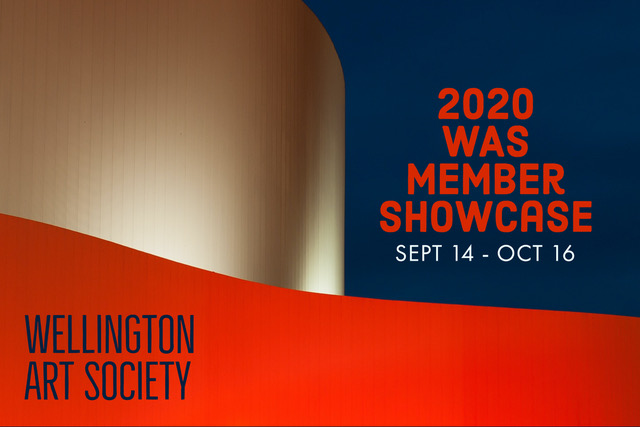
I’m a member of the Wellington Art Society, a local group for artists to talk about their work and share it with the wider world. Ordinarily, our member shows are in-person but in-person isn’t an option these days, so we’ve gone virtual! Virtual is so cool because it means you have the opportunity to view all sorts of fun art from the comfort of your home. If you’d like to visit, the show opens Monday, September 14, 2020 and closes Friday, October 16, 2020.

The link to visit is: https://www.kunstmatrix.com/en/wellington-art-society

Instructions for navigating through the show are available on the website. I suggest the guided tour option so you don’t miss a single work of art! If you do visit, I’d love to know what you thought of the show.


If you’re ready for a private (virtual) showing of my art, you can schedule an appointment here.

To discuss commissioning me to make a textured fiber painting specifically for you or someone you love, please schedule an exploratory commissioning conversation and we’ll see what we can create together.

If you liked what you read (or watched if you chose the video), please share with the one person you absolutely know would like it too!

What being an artist means to me

It took me a long time to figure it out, but being an artist means everything to me. I fought against this identity. When I finally surrendered, life got a whole lot easier.

If you’ve struggled or fought against your own creative calling, keep going to read the article. If you’re rather watch and listen, jump to the video at the end.

Image credit: Hilary Clark – detail view of “Crushed”

The journey…

Being an artist means everything to me. It’s who I am. But I didn’t always know this. In fact, I spent years actively denying it to myself.

Being an artist didn’t feel practical. It wasn’t a logical move. I questioned my ability to make an income. I wondered how I’d ever find the time to make art while working a full time job.

I came up with tons of excuses about why I couldn’t possibly be an artist. I even chose to take another career path in my obstinance, one that was just as distracting to creative thought.

Initially, I thought I’d be a writer, penning New York Times bestselling novels with ease. I’ve always loved to write, beginning with an introduction to poetry writing in the 4th grade, then creative writing classes in high school and college. I write well. I can tell a compelling story. I thought novel writing would be a breeze.

It wasn’t. I found myself resistant to writing, to putting my butt in the seat and fingers to keyboard. I’d get a good start with a plot, then it would die out for lack of imagination on where the characters might go next.

So I decided I wasn’t meant to be a writer, of fiction novels at least, because I told myself I didn’t have what it took to carry a plot line through 300 pages.

From novelist to children’s book writer…

When I gave up on writing novels, I thought, oh, I’ll write children’s books instead – they’re shorter; my imagination can carry a story line through to the end. I love fantastical creatures, so writing books to captivate children felt simple.

And I wrote one – for my niece as a gift for her 5th birthday. And I started another for my nephew that remains unfinished because he grew older and fell out of interest in superheroes.

So then I told myself I wasn’t qualified to write children’s books because I don’t have children of my own.

From writer to life coach…

I set writing aside, pretending I’d given it a good try and pretending it didn’t hurt my heart just a little bit to give up on my lifelong dream to write books. And I went on a quest to find another career.

I found life coaching. I got educated on what it means to be a life coach. I practiced and coached and tapped into all the personal growth I’d done on myself to help others. I found coaching satisfying – when the light bulb goes off for a client can be incredibly joyful.

But it wasn’t creative and it felt very much like it was in the way of what I really wanted to do.

Admitting it…

For over 20 years, I’ve been creating with my sewing machine. I started with traditional lap quilts, then began to make art quilts of my own design, and about 6 years ago, I shifted to what I call textured fiber paintings – densely stitched abstract fiber pieces.

Through my corporate career, through my exploration around being a writer, through my journey to train and practice as a coach, I continued to make my fiber pieces.

That’s all I really wanted to do. In fact, I thought becoming a coach would be the path to allow me more time to create my fiber art. But coaching didn’t. It distracted me instead.

And still I struggled and fought against calling myself an artist.

Then my partner and I moved across country in the middle of a pandemic and something shifted inside me. A door opened and through it, I saw opportunity. I saw that my struggle and fight were exhausting and it was time to surrender.

So I did. I surrendered so I could accept who I really am – an artist. I’m an artist who creates feelings out of fiber and it is everything.

A life of grace, ease, and lightness…

Eckhart Tolle wrote in The Power of Now, “To offer no resistance to life is to be in a state of grace, ease, and lightness.”

That’s what being an artist feels like to me – a life of grace, ease, and lightness.

From the moment I surrendered to my calling, that of being an artist, everything got simpler. My mind exploded with creative ideas. I began to explore other ways to make art, like drawing and painting, which had previously held little interest because I believed I wouldn’t be any good at them.

My mood shifted from a state of frequent quiet gentle melancholy to one of constant simmering joy.

Most surprising of all, the story line for a novel came to me, complete with characters, the plot path, and easy breezy writing time with my butt in my seat and my fingers on the keyboard.

Being an artist means everything to me. It’s who I am.

But I never would have found this joy if I’d continued resisting what my heart knew.

In closing…

So many of us spend some portion of our lives struggling against what our deepest inner knowing calls us to be and do. I spent most of my adult life in that struggle. And then I stopped resisting and everything became easy.

If you’ve fought and struggled against what your deepest inner knowing is calling you to be or do, especially if it’s a creative calling, I’m here to tell you it’s time to surrender. In fact, I’m here to help you get there. Part of my definition of myself as an artist includes helping others who’ve struggled to claim that same definition for themselves. I can help you release the resistance and find your state of ease.

I promise you, when you let the struggle go, it will mean everything.

P.S. If you could use help to surrender to your creative calling, get in touch and we’ll set up time to talk about what I call The Hilary Method, my process to help you become more productive and proactive so you can be more creative.

P.P.S. If you liked what you read (or watched if you chose the video), please share with the one person you absolutely know would like it too!

I’m a lazy artist

The other day, I was speaking with a friend and I said, “I’m a lazy artist.” She asked what I meant by that; I thought I’d share what I said with you too.

If you’ve ever felt like you’re too lazy to do the creative thing that calls you, or conversely, you wish you could be lazy but you feel like you’re too busy, keep going to read the article. If you’re rather watch and listen, jump to the video at the end.

Photo by Roberto Nickson on Unsplash

What I mean by lazy…

What I mean when I say I’m a lazy artist is I don’t want to work all the time, 8 or more hours a day and on weekends.

I cherish my down time. I cherish my self-care time. And I cherish my family time.

Because these pockets of time are so important to me, I’ve sometimes felt conflicted about having enough time to make my art, which is also critical to my well-being.

I’m a maker, a creative first and yet, I’m always seeking alignment between my calling and my personal and family needs. So for a while, I fought my laziness.

Doing that, fighting my laziness, backfired on me. I ended up feeling resentful towards the thing I most enjoy doing, being an artist.

So something had to change.

Embracing the lazy…

That change began with a decision to embrace the lazy, to stop trying to be someone I’m not.

Then I took two steps to set myself up for success, which you can do too.

These steps are:

    • Give yourself permission to be yourself
    • Put systems and structure in place to allow you to be productive and proactive

Give yourself permission…

The first step to success as a lazy creative is to give yourself permission to be yourself. Here’s what this looked like for me:

I’m a slow mover in the morning and always have been. But I was pushing myself as an artist and creativity trainer to get up and get moving as if I still had a corporate job. I was forcing myself to get up earlier than I like (around 4:30 AM), to rush through my shower, to shovel down breakfast, and be at my desk or in my studio by 7 AM. This left no time for self-care, which for me is journaling, meditation, and exercise, all of which I know I must do at the start of my day or they won’t happen.

So after deciding to embrace my lazy, I gave myself permission to be myself. I get up at 6 AM and journal for 20 minutes. I eat breakfast and catch up on social media and email. I meditate for 10 minutes, then I go for a 2 mile walk. I come home, I shower, and then I start my work day around 9:30 AM.

I work until I’m done, with the goal of never working past 5 PM, so I can relax before making dinner, and then enjoy down time with my partner in the evening, which includes reading and the occasional show.

Your permission will look different than mine. You’ll need to get clear on what’s important to you so you can choose what your lazy looks like.

Systems and structure…

The second step is to put systems and structure in place so you can be your most productive and proactive in the time you have available to you. Giving yourself permission to be yourself is important. To pull it off, however, this step is critical.

For as long as I can remember, I’ve been able to complete my work in less time than others (and my results were stellar, so it’s not like I was cutting corners). What this meant was I accomplished more in four to six hours than others did in eight.

When I remembered this about myself, I realized I could continue to embrace my lazy even as an artist. All I needed to do was set up systems and structure, much like I’d done throughout my corporate career.

I’m a productivity and time management geek. One of my personal mantras is “work smarter, not harder”. I’m an expert at designing solutions and finding efficiencies where others only see obstacles and an endless road. So I decided to apply these skills to my own art career.

One of the most valuable structures I use is time blocking. It allows me to divide my work into similar chunks so I can focus on one thing at a time. I have two full days for administrative work, which includes creating and scheduling my marketing content. I have three full days for making art in my studio. By using time blocking, the pressure fell away to do all the things on all the days. Now, if I want to make art on a Saturday or Sunday, I do it for the joy of it, not because I didn’t have time during the week.

One of the most valuable systems I use is a task app. I use Todoist, where I dump every single to do that pops into my head. Each week, I go through it (I’ve got it organized into work segments) and schedule my work for each day of the following week. I don’t have to think about what I’m going to do on a given day or what topic I’ll write about for my weekly article – I’ve stored it all in Todoist. My lazy artist brain is free to be creative because it’s not loaded down with tasks and projects.

These are just two examples of the systems and structures I use. There are loads more out there to choose from, which means what I use might not be right for you.

In closing…

I’m a lazy artist. But by granting myself permission to be myself and then putting systems and structures in place that allow me to be my most productive, proactive, and creative, I’ve found success.

If this is something that calls to you, I can help. I work with people just like you who feel too lazy to do the creative thing that calls, or conversely, feel too busy. I work with you to grant yourself permission to be yourself and then train you on the systems and structures that’ll be most effective for your situation. Whether you want to insert creative time into your day, or you just want to be more productive and proactive at work, creativity training can help.

P.S. If you could use help to embrace your lazy, get in touch and we’ll set up time to talk about what I call The Hilary Method, my process to help you become more productive and proactive so you can be more creative.

P.P.S. If you liked what you read (or watched if you chose the video), please share with the one person you absolutely know would like it too!